
If you wanted motion in a branded space over the last decade, you needed to use digital LED walls, projection systems, or interactive screens. Digital screens work when they’re what is called for, but they comes with overhead—power, control systems, programming, tech crews, maintenance. For a single flagship store, that’s fine. For a 200-location rollout, you’re managing a lot of variables.
Traditional print has always been simpler. Fast to deploy, cheap to scale, stable for months or years. The downside was obvious: it’s static. You put it up and it sits there.
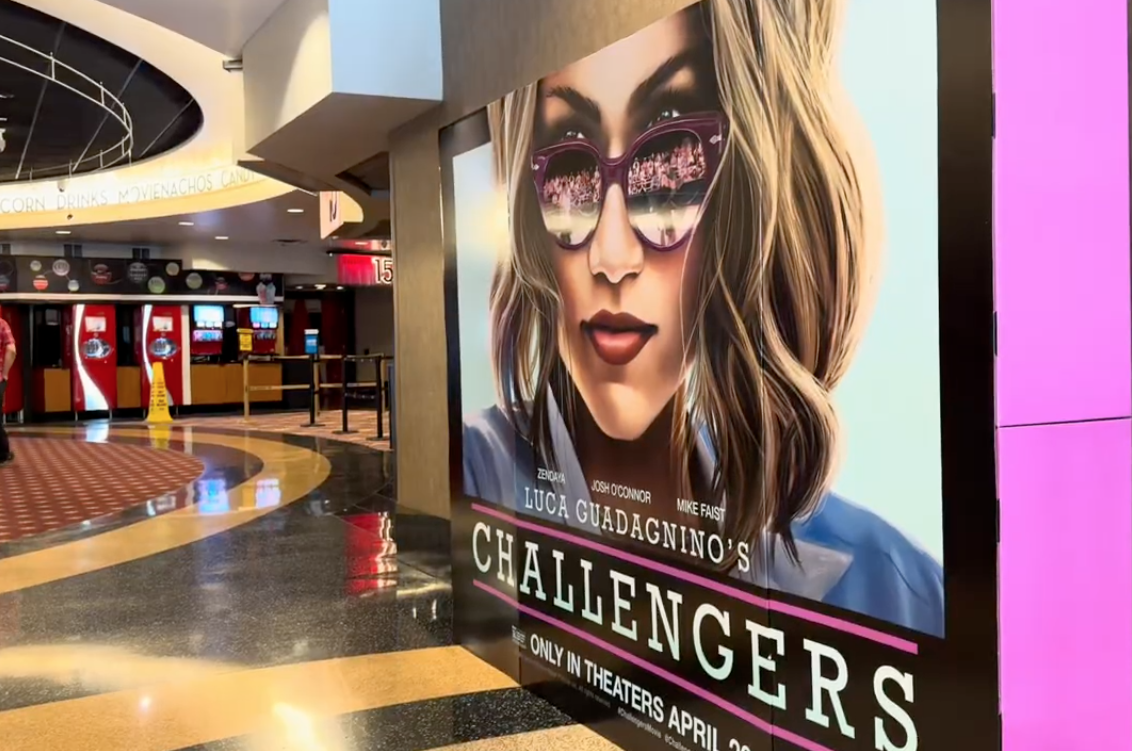
Large-format lenticular is starting to fill the gap between those two. It creates motion as people move past, no electronics required. The technology isn’t new—lenticular has been around forever in smaller formats. But using it at architectural scale is a relatively recent possibility. The reason it’s working is straightforward: static graphics lose attention fast, and lenticular grabs attention.

Why Static Graphics Stop Working
This is something anyone in retail or trade shows has watched happen. Someone glances at your signage, registers it (or not), and then keeps walking. In retail they call it visual fatigue. At trade shows, saturation. Either way, once a viewer has acknowledged your graphic, the interaction is over and they’re moving on.
Lenticular changes that because the image transitions while they’re walking. So the viewer slows down, step sideways and in some cases, walks back and forth looking at the display. That interaction is a huge increase in attention. It’s not a new insight, but it just works. Motion pulls people back in.
Where This Is Actually Getting Used
Trade shows are the obvious application. A beverage brand we worked with recently swapped out a digital tower for lenticular panels. The lenticular version shipped flat, needed no power, and went up with a general labor crew in about half an hour. Same visual impact as a screen, but more interaction. And none of the logistics associated with electronics.
Retail is using it for seasonal campaigns and feature zones. You can swap the lenticular frontage instead of re-fabricating entire fixtures. This creates the perception of change without the expense.
Corporate lobbies, hospitals, hotels—spaces where you want something dynamic but don’t want to maintain another technical system. Lenticular gives you motion without creating a facilities issue.
Then there’s portable deployment: roadshows, dealer events, training venues. Places where you don’t have local tech support and can’t afford something that might not work when you unpack it. Lenticular is dead simple. You simply mount it and walk away.
Real World Example
We recently produced a series of trade show displays for SHRM. The graphic showed the word “WORK” flipping to the “SHRM” logo as the attendees walked past it. We attended this show to see it in action and collect video.
As we were filming, multiple people stopped in their tracks, swayed back and forth, and then walked back and forth to see the change repeat back and forth. Some even pulled out their phones and videoed the display as they moved back and forth in front of it. That sort of engagement is communications gold and something that even a full video wall would not create.
The attendees were drawn in by the effect, but ultimately, they saw the message and the connection was made.
When Lenticular Beats Digital
Digital makes sense when content changes frequently or you need interactivity. Lenticular makes sense when you just want motion and don’t want the complexity.
No power requirements, so no permitting issues. Nothing breaks. Freight is predictable and installation is identical to any rigid print panel. The surface stays consistent for however long you need it.
For multi-site rollouts, especially at retail, that predictability matters more than people realize. A digital display that works perfectly in one store might need different voltage, mounting hardware, or insurance in another location. Lenticular avoids all of that.
Why Printers Outsource Lenticular
Lenticular, at it’s heart, is large-format printing. The presses are the same, but everything else from prepress file prep, to material, and even packaging is different. You’re sequencing frames, calibrating angles, mapping to lens pitch. Get the alignment wrong and the animation looks off. Viewers may not understand how its made, but when it’s wrong, they see it immediately.
Most commercial printers don’t want to deal with it, so they outsource. Which actually works out great, not just for us, but for the client and the printer. Printers, agencies and fabricators can offer lenticular without investing in new equipment or learning new skill sets. We provide the specialized work, they handle the client relationship. It’s a straightforward partnership model.
Motion Isn’t Optional Anymore
Everyone is used to motion now. Scrolling feeds, animated logos, video everywhere. When they see a static surface, something feels inert, or even boring about it.
Static print may still work fine for straightforward messaging. But when the environment benefits from change, when you want people to notice something more than once, lenticular makes sense. It’s becoming a standard tool in the toolkit of all innovative marketers.
Motion used to mean digital. Now it can be a part of your print campaign. That opens up a new world of possibilities for your brand or messaging campaign.